
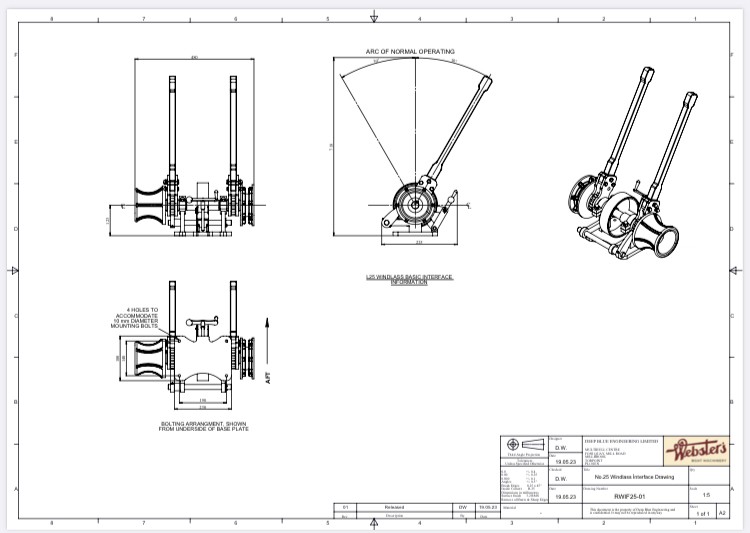
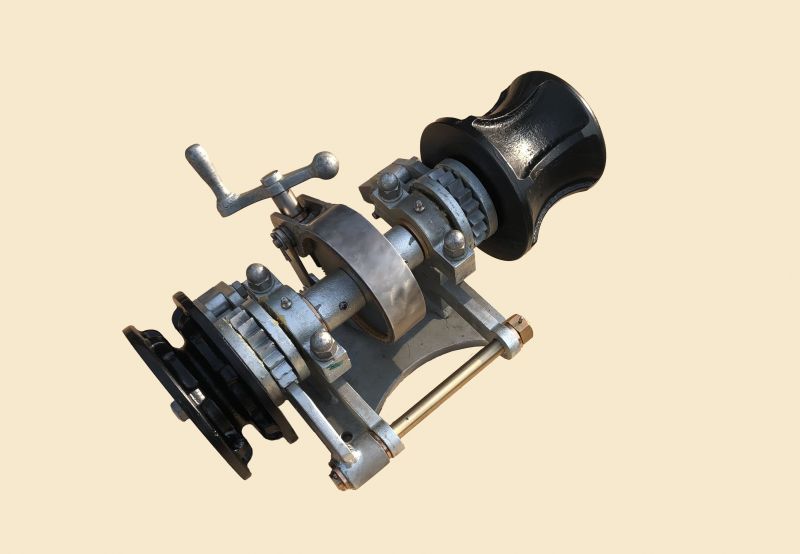
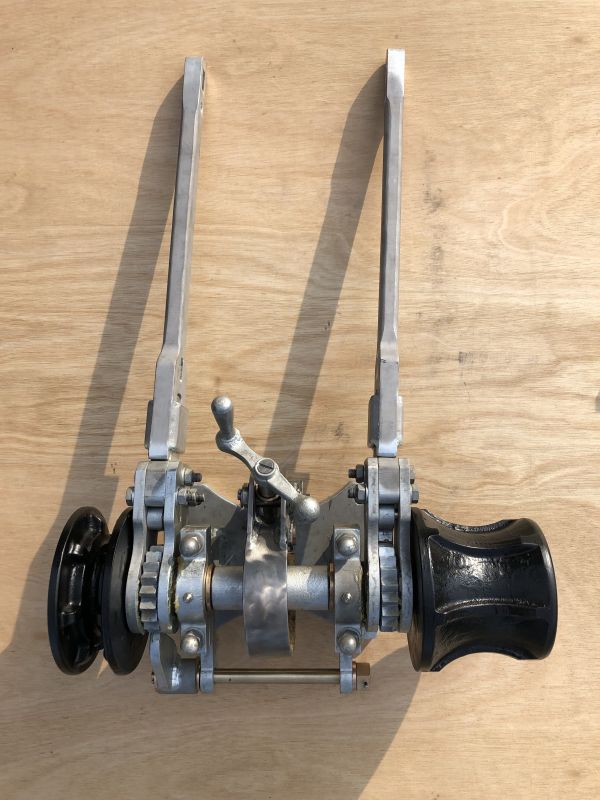
The No.25 was the most popular model windlass when they were in production, and this is why a decision was taken following my retirement, to offer the No.25 as a kit. The kit allows customers with the necessary skills to make their own windlass. The work involves machining and welding, full details of which are included in the kit instructions. The No.25 is a very robust, reliable and powerful windlass, used on a variety of boat types, from traditional sailing boats to more modern exploration vessels. Owners selected the No.25 because over the years it gained a positive reputation for reliability and effectiveness.
The kit consists of all of the plate profiles necessary to create the mounting base fabrication, two ratchet assemblies and the brake assembly, a blank warping drum and chain gypsy casting are supplied, plus the main shaft material. Most of fasteners and small parts are also supplied, but because of the different ways in which the windlass can be configured, not every detail is covered.
To enquire about the kit, please click on the enquiry button and send your details. For more information on this windlass, please click on Additional Information below.
- Additional Information. No.25 Manual Ratchet Windlass
-
The No.25 is a ratchet windlass, operated using alternate fore and aft strokes of the two ratchets/handles, to achieve a continuous movement of chain or rope when the anchor is being retrieved. It is a powerful and robust winch, of simple construction, designed to be as reliable as possible. The No.25 windlass design has evolved, from the initial specification (which Dave Webster still uses on his own 32 ft gaff cutter 'Nimue') to the current design which has a number of detail changes, all based on trial and experience. The windlass can be supplied with a gypsy to fit 8mm or10mm chain. A foot operated brake is used for the No.25 kit.
- MAINTENANCE
-
The main shaft bearings are lubricated via grease nipples installed into the bearing caps; the pawl is also fitted with a grease nipple. The brake assembly can be greased using a pot of grease and a brush such as a small paint brush. A light oil is recommended for the pawls inside of the ratchet assemblies, and then the same grease pot and brush method for applying grease to the ratchet/star wheel part of the ratchet assembly. The windlass should be covered when the vessel is not in use or if the windlass is not in use for any extended periods of time.
- SAFETY
-
With deck machinery generally there is a need to take great care and maintain a high level of awareness with regard to the moving parts of both the machinery and associated equipment such as ground tackle, chain, ropes etc. Operating and Maintenance details can be downloaded from this site, and should be read and understood before attempting to operate the windlass. The procedures for anchor deployment and retrieval provide warnings, aimed at alerting the operator to potential hazards and therefore it is essential that the procedures are followed carefully.
Downloads
Ratchet Windlass O&M Manual
